Showing posts with label volcano. Show all posts

Thursday, January 13, 2011

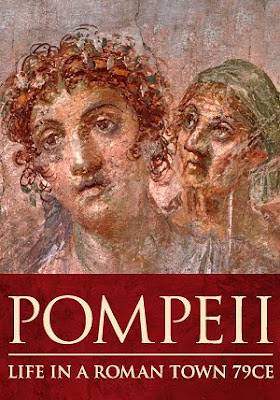
Pompeii Exhibition to the Naitonal Museum

Dear 1-1 and 1-9.
I have five slots for each class to go to the Pompeii Exhibition in the National Museum on the 18th of Jan 2011 (next Tuesday) from 1.15pm to 3.45pm.
The exhibition is free and there is two way transport provided to and fro from the museum.

What is it about?

Photo credited to National Museum


It's about life in Rome in 79CE which was buried under volcanic ash and pumice due to the eruption of of Mount Vesuvius in southern Italy.

As spaces are limited. It will be given only to those who make a comment on the tag board.

Please indicate your name, class and index number for you interest in this exhibition. It will be good for those who can go as it would be a good starter for the chapter and study of Volcanoes next week. PLEASE INDICATE INTEREST BY TONIGHT!13/01/11, THE FIRST FIVE FROM EACH CLASS WOULD BE AWARDED THE PLACE TO GO. The exhibition is FREE!

Thanks!


Cheers!
Miss Zheng

Thursday, April 8, 2010

Questions by students

Dear Gentlemen,

Below are questions asked by your schoolmates, you may look at them and see if they can also help you clarify some doubts.

I will update it constantly with any quesitons asked.

How are volcanoes formed? (Asked by Shawn, 1-5) [Chapter 8, answer in pg 84 of textbook]
1) Volcanoes are formed by the process of vulcanicity.
2) This usually happens when two plates collide with each other and where the denser plate will sink into the mantle and melt into magma due to the high temperatures.
3) The high temperatures also causes built up pressure of gases under the Earth's surface which leads to an eruption due to the release of this built up pressure of gases.
4) When the magma escapes to the Earth's surface through a single hole due to eruption, the cooler temperatures on the Earth's surface causes the lava to harden and solidify.
5) Overtime, with repeated eruptions, the hardened layers of lava results in a cone-shaped mountain called a volcano.

How do plates move? (Question in mini test and re-asked by Deon, 1-5) [Chapter8, answer explained in blog post and ink experiment video]

Plates lie/float on molten mantle.
Plates moves as the hightemperatures within the Earth surface causes the molten mantle to flow in certain directions due to convection currents.
Therefore, movements of the mantle cause the crustal plates that lie on it to move.

How are plateaux formed? (Question by Warren, 1-9) [Chapter 8, textbook pg 97]
1) Plateaux are formed by the process of vulcanicity.
2) This usually happens when there is a long crack or fault in the Earth's crust.
3) The high temperatures also causes built up pressure of gases under the Earth's surface which leads to an eruption due to the release of this built up pressure of gases.
4)Magma then escapes from a long crack or fault and spreads over a very large area, the cooler temperatures on the Earth's surface causes the lava to harden and solidify.
5) Overtime, with repeated eruptions, the hardened layers of lava results in a plateau.

*Process is the same as volcano, just that instead of a single hole vent, its a large LONG crack or fault.

Saturday, March 13, 2010

Chapter 8: Animation of Plate Tectonics

Dear Gentlemen,

Click the link below and explore the website for different animations of the different processes taught in class already so as to better understand and visualize what is taught already. =)


Cheers,
Miss Zheng

Chapter 8: Vulcanicity and the landforms

Dear Gentlemen,

Below are the videos I went through with you (Class 1-9), Class 1-5, you can look through it as you read the textbook and do your notes.

How Volcanoes are formed (Vulcanicity)

The video above talks about how volcanoes form and this process of Vulcanicity is a very important geographical concept that you must know for Chapter 8. The video also talks about the Pacific Ring of Fire which is found in the Pacific Ocean area, please note that you must know how to highlight where the Pacific Ring of Fire is.

The next video below is about the different types of volcanoes that can be found, this is added knowledge that is not talked about in your textbook. The analogy I gave in Class 1-9 is honey and milk. Honey and milk are both liquids, but Honey is much thicker than milk. I gave the example in class that if I was to pour out honey and milk on the tables, which will flow faster, if you have eaten both liquids, your answer should be milk will faster. As such, since milk can flow faster, this would also mean that milk can go over a larger surface area on the table as compared to milk.

You all know that when magma reaches the Earth's surface, it becomes lava and it cools down when on the Earth's surface and hardens. So if milk can reach over a larger surface on the table, this would also mean that the surface area for it to be in contact with cooler air would be larger, so it will cool down much faster as compared to honey.

Different volcanoes are made up of different materials and magma that comes up to the earth's surface, some lava may be very thick or some very thin, so eventually it will form different kind of volcanoes. Read the notes on the Volcanoes, below there are the different types of volcanoes introduced, you will not be tested but it is for you general knowledge.


Remember for all that I have gone through, you must know the
1) the difference between magma and lava
2) where the most volcanic activity occurs (plate boundaries)
3) how does an eruption occur
4) different crustal plates, how to identify and label them.
5) The different internal processes that happen (PULL, PUSH, SLIDE)
6) The resultant landforms due to the internal processes
7) To draw and label a basic cross section of a volcano
8) How volcanoes are formed (To be able to describe)
9) The location of the Pacific Ring of Fire

Don't leave it to last minute to finish your work, do it NOW, and so that you can enjoy at the later parts of your holidays.

Cheers,
Miss Zheng
Thursday, March 11, 2010

Chapter 8: Internal Structure and forces that create landforms

Dear Gentlemen,

Below are the videos I showed in class today to better let you visualize and know what are geographical concepts and ideas of this chapter. Do look through the videos again as revision and get a better understanding of the many new geographical concepts introduced.

Video on the Internal Structure of the Earth

Video on the Early Earth (The idea of supercontinent Pangaea, Laurasia and Gondwandaland)

Video on the concept of Plate Tectonics Theory, Continental Drift, plate boundaries(constructive & destructive) and the different internal forces (Push, Pull and Slide)

How convection currents work in the Continental Drift Theory (To cause plates to push, pull and slide with each other)

Eruption of Kilauea Volcano (In Hawaii, which is mentioned in the "How volcanoes form" video above, where hotspots were introduced and that volcanoes at hotspots form due to the loose rocks rising up from the core to the crust)

Remember to label the different plates on your notes and also know where fold mountains can be found on the world map!


Wednesday, March 10, 2010

Chapter 8: Will Krakatoa rock the world again?

Dear Gentlemen,

Especially for Class 1-5, I told you all about Krakatoa found in Indonesia and how it's explosiveness could be heard as far as Perth in Australia, also added that the amount of TNT/power that Krakatoa 13,000 times the power of the bomb that was dropped on Hiroshima! This eruption caused change in weather where average global temperatures following the eruption fell by as much as 1.2 C, as the huge quantities of sulphur dioxide pumped into the atmosphere resulted in clouds that reflected a greater amount of incoming light from the sun. Also of course, destruction to not only humans but also the physical environment.

Just last year, there were speculation of Krakatoa stirring and threatening to erupt again. See excerpts of the online UK daily news and the pictures of Krakatoa taken from there.

Ominous glow: In 1883, more than 36,0000 people died when Krakatoa erupted - today, thousands more farmers live near the volcano
Risk: The smoking time-bomb is located on the Sunda Strait, between Java and Sumatra

Ticking timebomb: Islanders thought they had avoided another disaster after things went quiet in 2008

Firestorm: In an awesome display of flaming lava and molten ash, Anak Krakatoa - the child of Krakatoa - reveals its latent power. In recent years, eruptions have steadily grown in intensity
Devil’s cauldron: Krakatoa’s eruptions draw in violent thunderstorms, adding to the air of menace

All photos from website,CLICK HERE FOR FULL ARTICLE